


Share this article


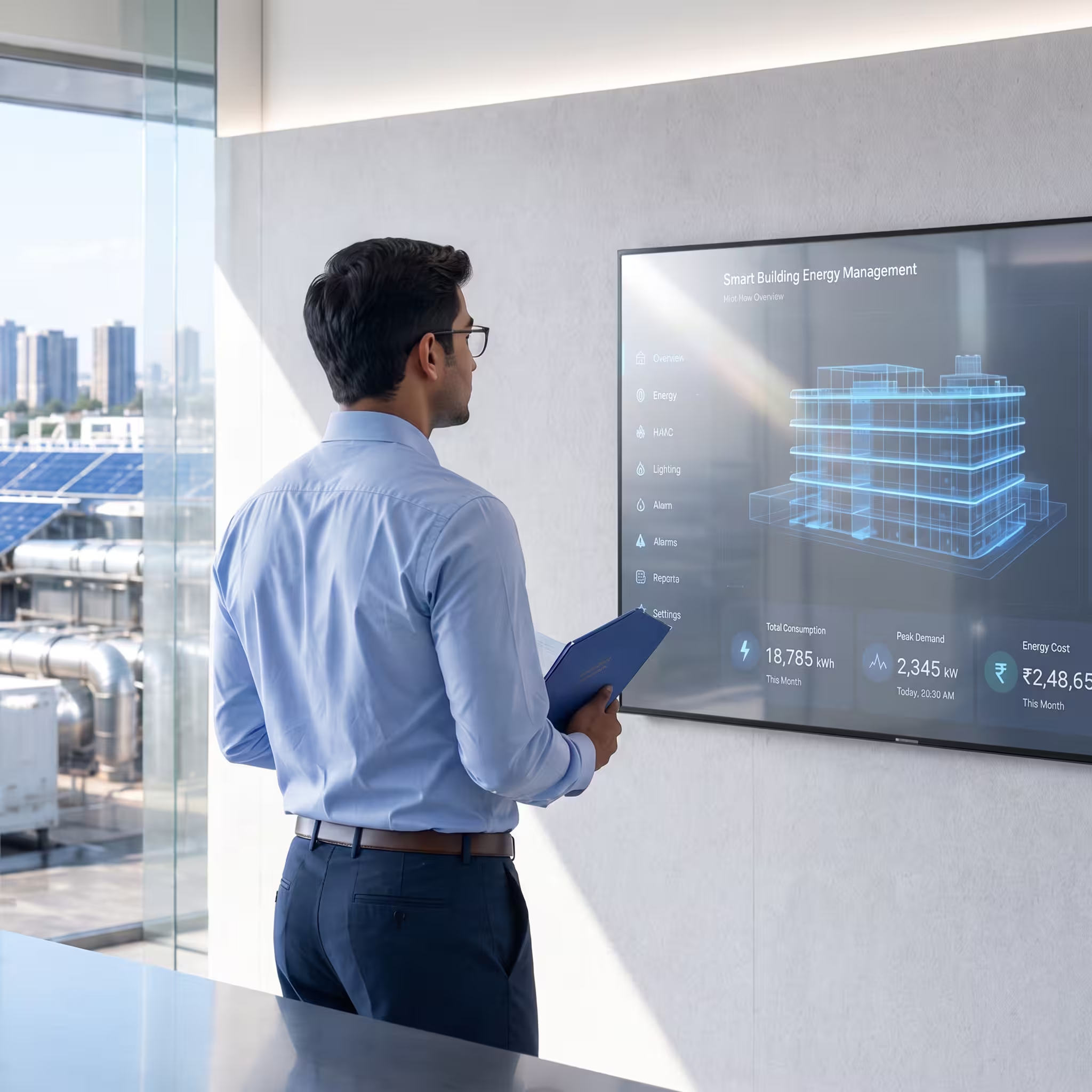
Workplace energy is a direct, actionable lever for ESG performance. Strategic design decisions, renewable sourcing, and integrated facility management close the gap between sustainability commitments and measurable outcomes at the asset level.
For most organisations, energy has historically been treated as an operational line item — a cost to be managed, not a metric to be measured. This mindset is rapidly changing. As ESG commitments move from boardroom aspiration to reportable obligation, energy consumption and sourcing have emerged as two of the most consequential indicators of a company's sustainability commitments. And the workplace, often overlooked in broader ESG conversations, sits at the centre of this shift.
Commercial real estate accounts for a significant share of global energy consumption. Within that, the fit-out and ongoing operation of office spaces — lighting, HVAC, building management systems, plug loads — represent variables that organisations can meaningfully influence. Unlike supply chain emissions or product lifecycle impacts, workplace energy is largely within an occupier's direct control. That makes it one of the more actionable levers available to sustainability teams.
Yet many organisations still lack visibility into how their spaces actually perform. Energy benchmarking, sub-metering, and consumption tracking remain inconsistent across portfolios, particularly for companies operating across multiple geographies. Without this data, ESG reporting becomes an exercise in estimation rather than evidence — a gap that regulators and investors are increasingly unwilling to accept.
Reducing energy use is only half the equation. Where that energy comes from is equally significant. The shift towards renewable energy procurement, through Power Purchase Agreements, Renewable Energy Certificates, or on-site generation, is now a measurable component of Scope 2 emissions reporting under frameworks like GHG Protocol and CDP. Organisations with ambitious net-zero targets cannot rely on efficiency gains alone; they need to address the carbon intensity of their energy supply.
At the workspace level, this translates into decisions made at the design and fitout stage — orientation and glazing to reduce solar heat gain, specification of energy-efficient systems, integration of smart controls that respond to occupancy, and where feasible, infrastructure that supports renewable sourcing. These are not aspirational features. They are design decisions with quantifiable outcomes.
A persistent challenge in sustainable workplace design is the gap between design intent and operational reality. A space can be built for high efficiency but fall short if systems are poorly commissioned, occupant behaviour is unaccounted for, or facility management lacks the tools to monitor performance in real time.
This is where integrated facility management becomes strategic. Beyond maintaining infrastructure, FM teams directly shape energy outcomes - conducting energy audits, establishing baselines, analysing usage patterns, optimising system schedules, and closing the "last mile" gaps where energy is quietly lost through idle equipment, unmanaged plug loads, or systems running beyond required hours.
Translating ESG energy commitments into workplace outcomes requires integration -understanding an organisation's targets and working backwards to identify what the workspace needs to deliver in terms of energy intensity, renewable sourcing, and carbon output.
This means specifying systems and materials that meet internationally recognised standards, building in sub-metering capabilities that provide asset-level visibility, and structuring facility management protocols that keep performance on track. For organisations operating across multiple markets, navigating the varying availability of green energy infrastructure and certification pathways, whether LEED, WELL, IGBC, or BREEAM, is equally important, ensuring that portfolio-level commitments translate into verified outcomes at the asset level.
Energy is not just an environmental concern — it is a financial, reputational, and regulatory one. As disclosure requirements tighten and stakeholder scrutiny increases, organisations that can demonstrate measurable, verifiable progress on energy performance will be better positioned — with investors, clients, and talent alike.
The workplace is not peripheral to this narrative. When designed and managed effectively, it can be one of the clearest expressions of an organisation's commitment to operating responsibly.