Share this article


Sustainability is now central to commercial real estate value creation. Integrated design, smart building operations, occupant wellbeing, and measurable ESG outcomes are defining how assets perform, with green-certified buildings commanding stronger rents and long-term relevance.
Sustainability is steadily reshaping the priorities of commercial real estate, compelling the industry to rethink how buildings are planned, constructed, and operated across their entire lifecycle. What was once a “nice-to-have” has become a core driver of value creation, risk mitigation, and operational excellence. The conversation has decisively moved beyond the cost of going green to the long-term value it unlocks.
In mature markets such as North America and Europe, the focus has largely shifted towards upgrading existing building stock—retrofitting energy systems, improving insulation, and deploying advanced technologies to keep aging assets compliant with tightening regulations. India’s CRE story, however, presents a different, and in many ways, more compelling opportunity. With a significant share of commercial inventory either recently built or under development, India can embed sustainability principles from the ground up rather than retrofitting them later.
This shift is already visible across key office markets. Cities like Bengaluru, Hyderabad, Chennai, and Pune are witnessing a steady rise in green-certified developments, driven by demand from multinational occupiers and institutional investors. Certifications such as LEED, IGBC, and GRIHA have established strong benchmarks—but the market is moving beyond labels. Increasingly, occupiers and investors are prioritizing measurable outcomes: energy consumption, water efficiency, indoor environmental quality, and carbon reporting are becoming central to decision-making.
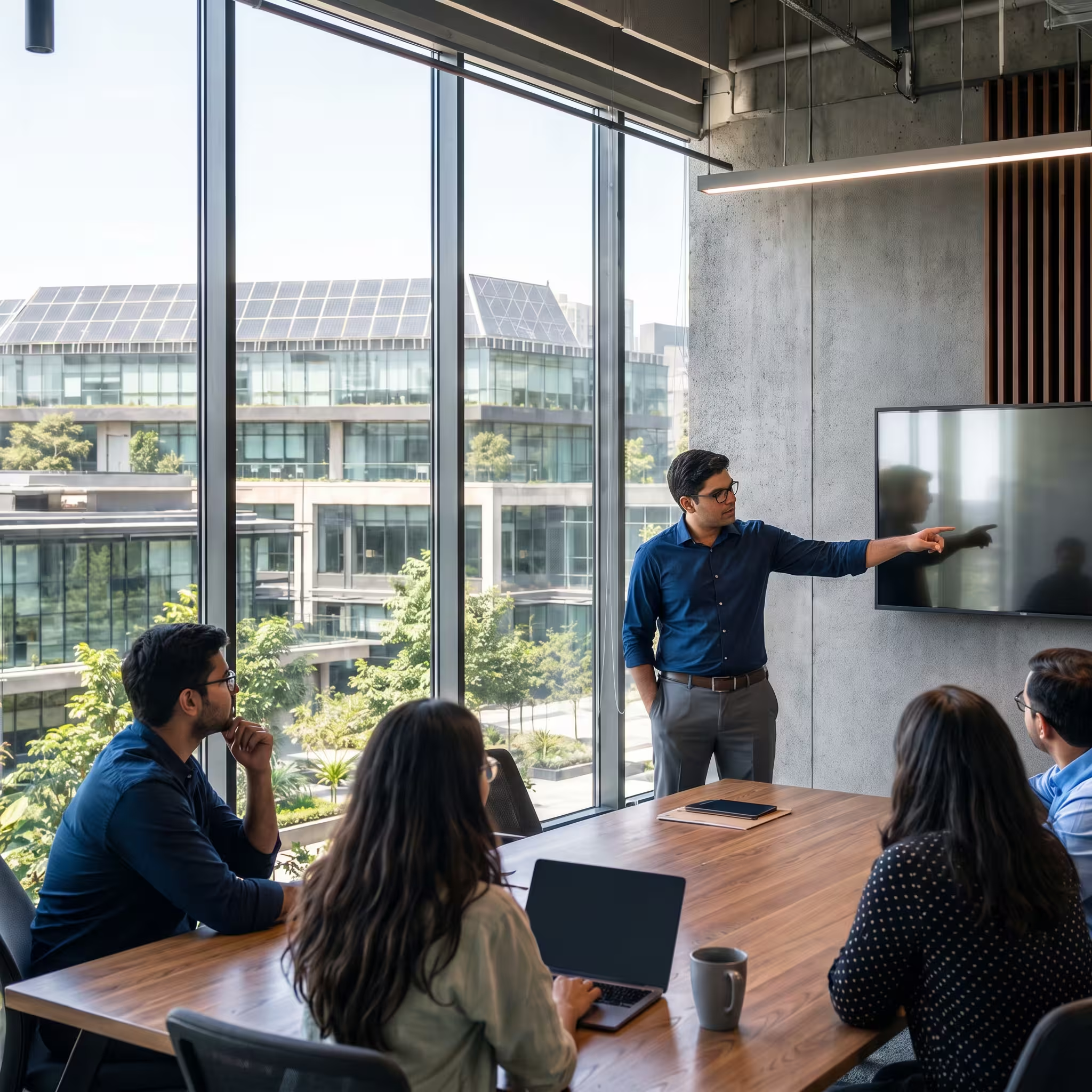
The most impactful sustainability outcomes are determined long before a tenant moves in. High-performing CRE projects now adopt an integrated design approach, bringing sustainability consultants and facility managers into the concept phase to optimise building orientation, apply energy modelling, and specify materials that reduce carbon footprint from day one.
Green construction is also evolving towards circularity. Modular components, reclaimed materials, and designs focused on longevity are replacing traditional linear models. Buildings are no longer conceived as static assets, but as adaptable, high-performance ecosystems.
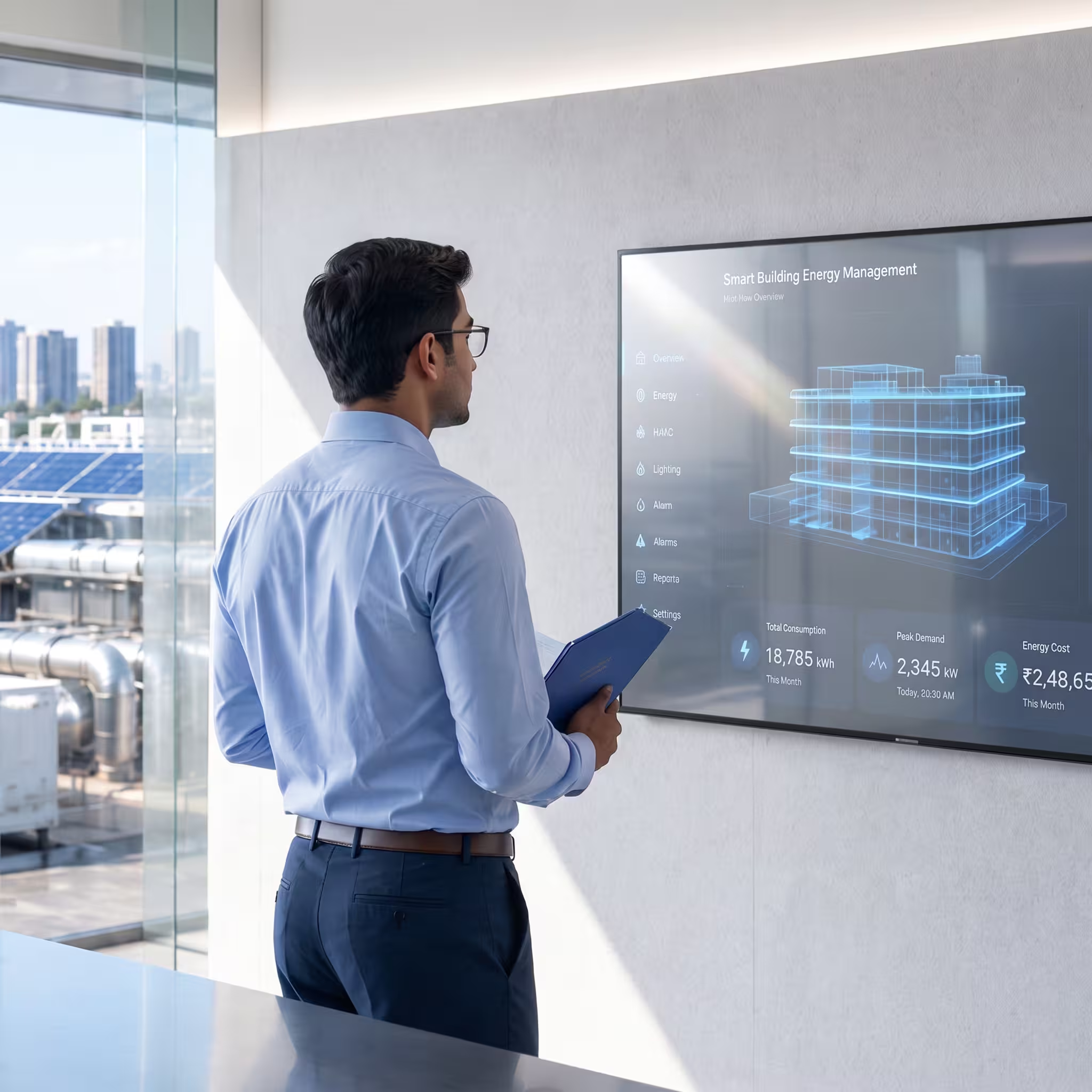
The rise of smart buildings and IoT technologies has transformed Integrated Facility Management into a data-driven discipline. The industry is moving from reactive maintenance to predictive optimization, enabling buildings to operate at peak efficiency around the clock.
Equally important is the role of standardized reporting. Sustainability is no longer defined by intent but by evidence. Measurable, auditable data is replacing broad “green” claims, allowing organizations to align with ESG requirements and deliver transparent, performance-driven outcomes.
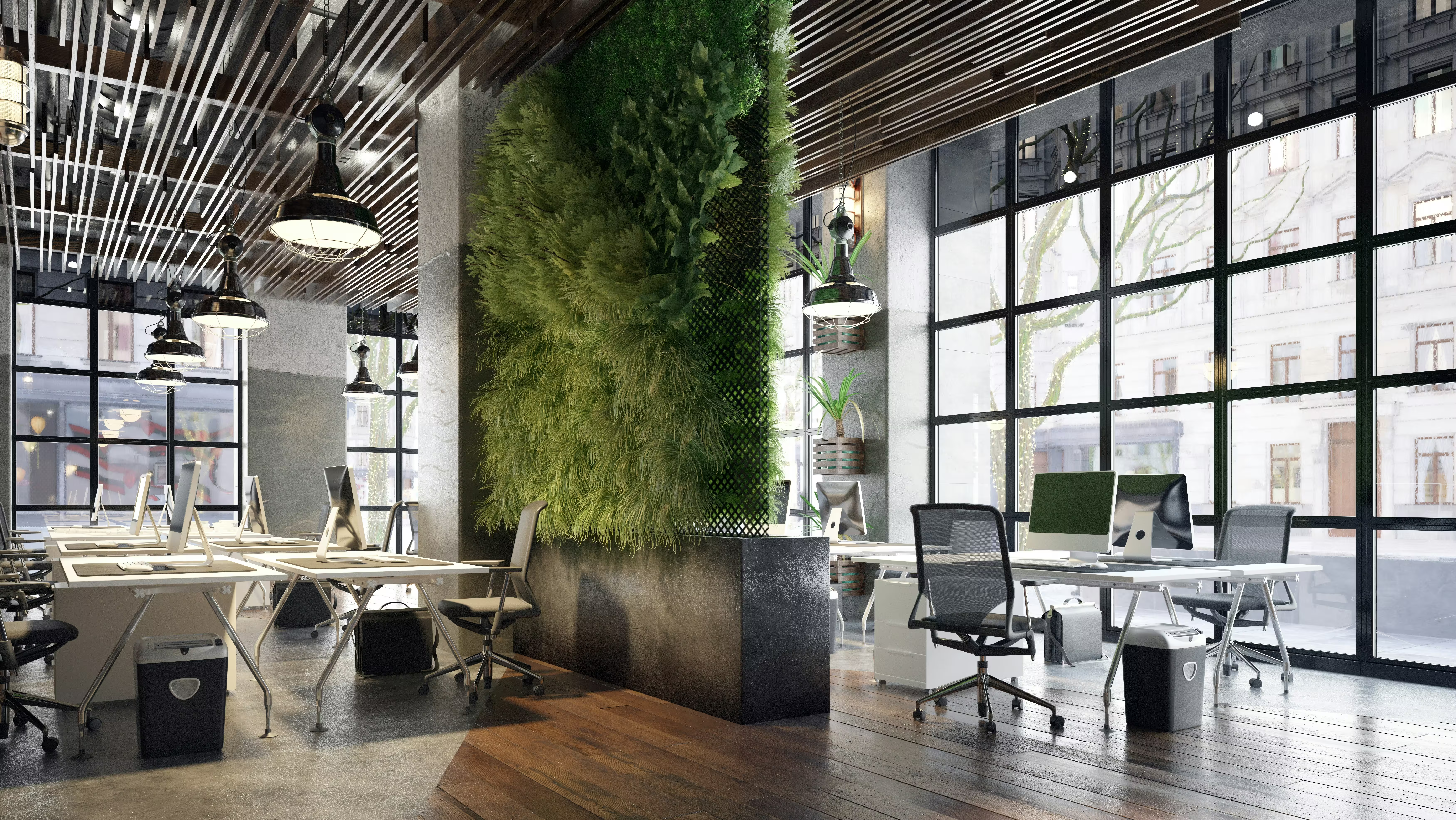
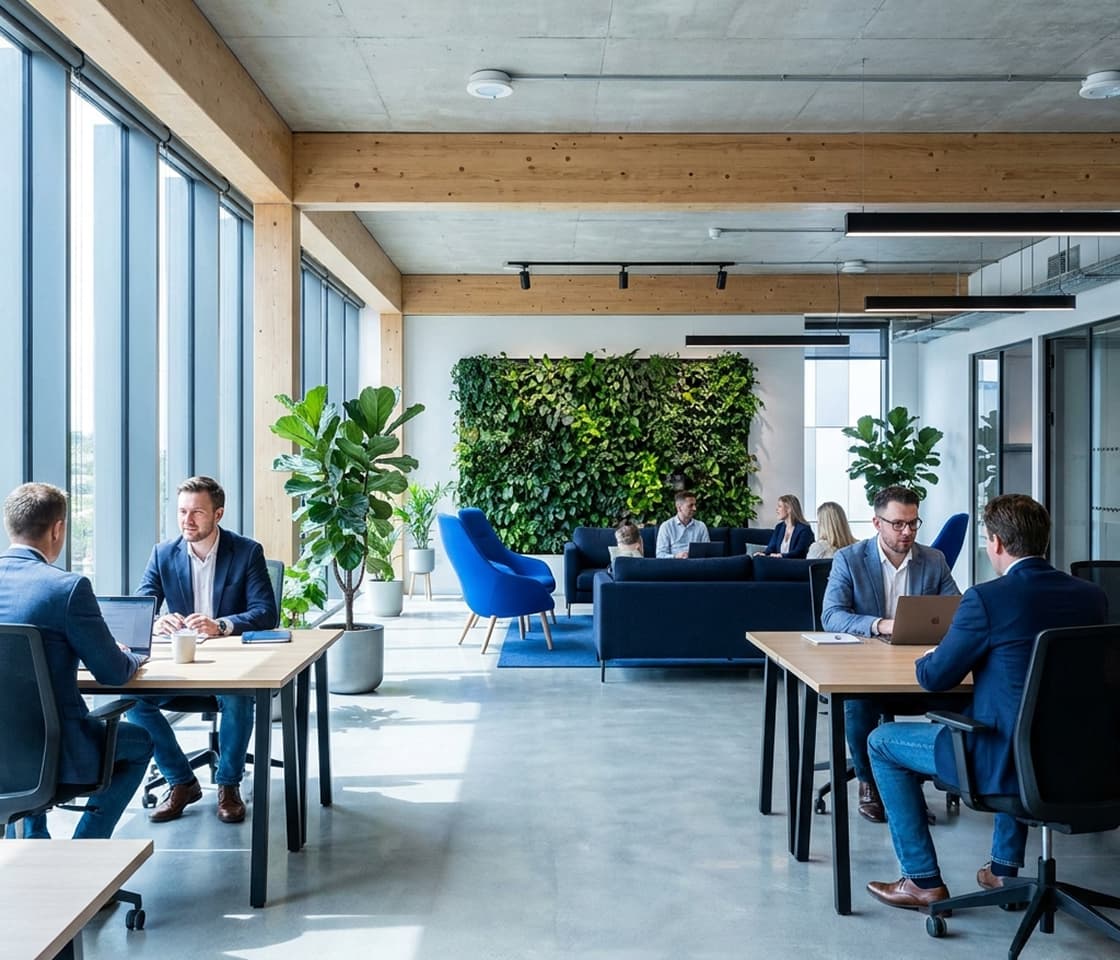
Perhaps the most significant shift is the expansion of sustainability to include the people inside the building and their wellbeing. Indoor environmental quality—natural light, ventilation, and thermal comfort—is now directly linked to productivity, health, and talent retention.
By pursuing certifications such as WELL alongside LEED, CRE stakeholders are reinforcing a critical idea: a “green” building is also a “healthy” one. This reframes the workplace from a cost center into a strategic asset for attracting and retaining talent.
The financial rationale for sustainability is now undeniable. A clear divergence is emerging in asset performance. High-efficiency, sustainable buildings command stronger rents and higher occupancy—the “green premium” is real and growing.
Conversely, assets that fail to adapt face increasing obsolescence, becoming harder to lease, finance, or divest. Sustainability is no longer an environmental consideration alone—it is central to value preservation.
Moving the needle on sustainability requires a shift in mindset, viewing buildings not as static shells, but as living ecosystems. While broad sustainability goals have laid the foundation, the next frontier is the rigorous pursuit of decarbonization.
Embedding sustainability across every stage of the real estate lifecycle—from development and financing to leasing, design, and operations—will ultimately determine how effectively the sector contributes to a low-carbon future.