Share this article


Explains why technology infrastructure must be engineered alongside MEP and architecture rather than treated as a late-stage IT procurement. Covers pathways and spaces, cooling for technology rooms, power density, AV and collaboration systems, and security infrastructure. Practical recommendations for integrating technology into project delivery.
Technology infrastructure in commercial projects is often treated as an IT procurement exercise: a specification handed over late in design, implemented by a low-voltage contractor, and coordinated after the fact with the rest of the building systems.
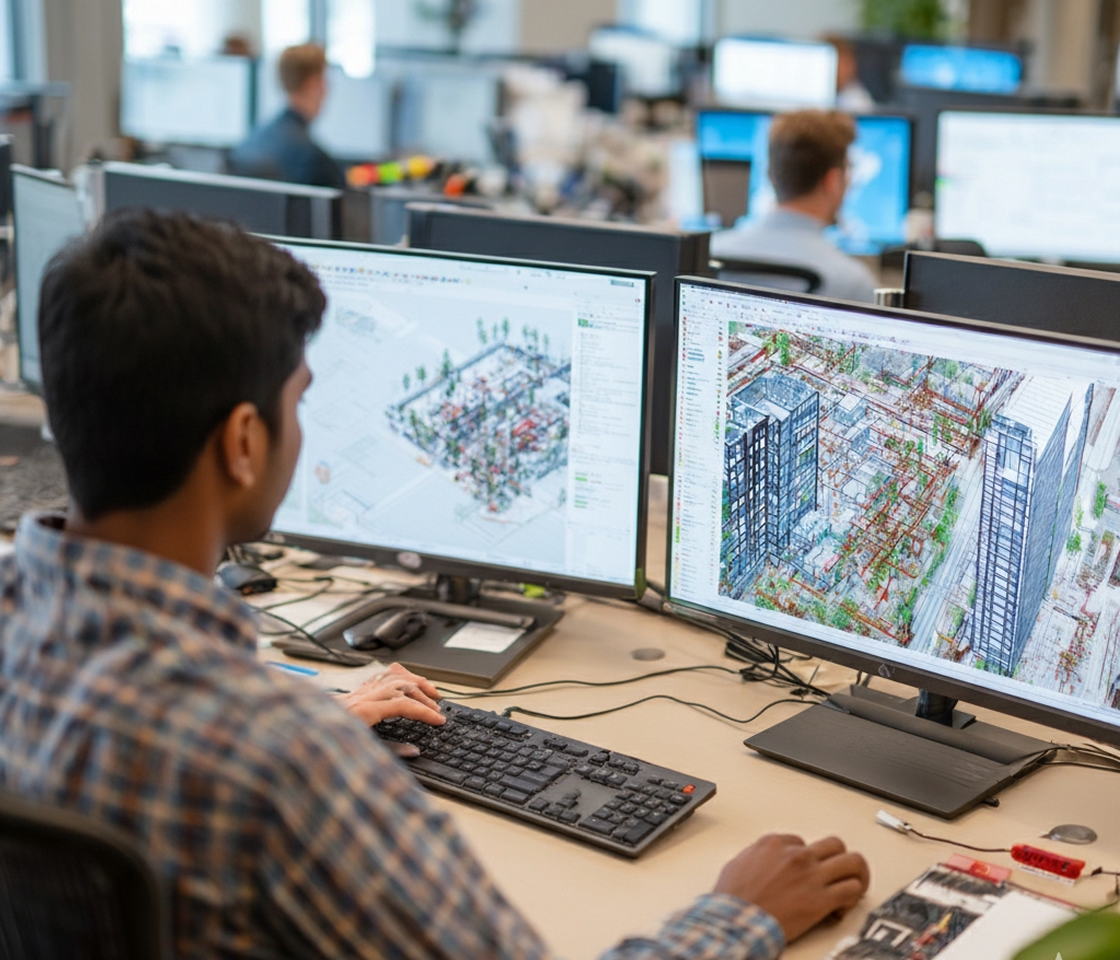
This approach fails more often than it succeeds. Pathways are undersized or misrouted. Cooling is inadequate for server and comms rooms. Power density in high-load areas is insufficient. AV and collaboration systems do not integrate cleanly with the architectural design. Security and access control are bolted on rather than built in.
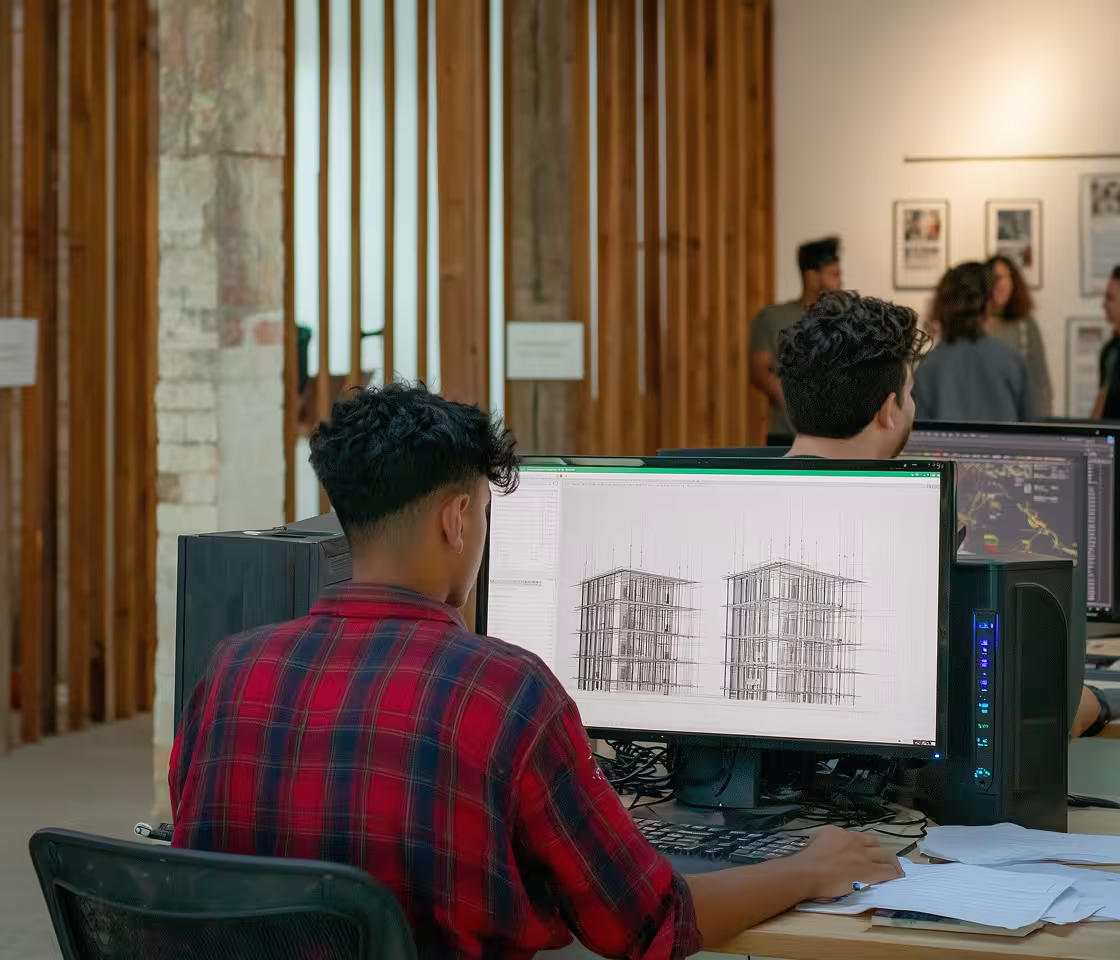
The root cause is usually the same: technology infrastructure was not engineered alongside MEP and architecture. It was treated as furniture rather than building infrastructure.
This article explains why technology infrastructure requires early engineering integration and where projects typically go wrong without it.
In a modern commercial facility, technology infrastructure includes structured cabling (copper and fiber) for data and voice, wireless network infrastructure, server rooms, network rooms, and telecommunications spaces, audiovisual and collaboration systems, physical security systems (access control, CCTV, intrusion detection), building management system integration, and specialized systems depending on use (trading floors, labs, broadcast, command centers).
These systems require physical space (rooms, pathways, racks), power (often at higher density than standard office loads), cooling (particularly for server and comms rooms), and coordination with architectural and MEP design (ceiling grids, wall blocking, conduit routing, cable tray placement).
When technology is treated as a late-stage addition, these requirements compete with design decisions that have already been made. Pathways are full. Cooling capacity is allocated. Ceiling voids are congested. The result is compromise, workaround, and rework.
When technology is engineered from the start, these requirements are integrated into the design. Pathways are sized correctly. Cooling is planned for actual loads. Rooms are located and sized appropriately. The result is infrastructure that works and can be maintained.
Cable pathway planning is one of the most common failure points. Structured cabling requires routes from telecommunications rooms to work areas, and those routes must accommodate current needs plus reasonable future growth.
Riser access. In multi-tenant buildings, riser access is often limited. Technology infrastructure competes with electrical, MEP, and fire/life safety systems for riser space. Riser allocation should be validated during site selection or early design, not discovered during construction.
Horizontal pathways. Cable tray and conduit routes from telecom rooms to work areas need to be coordinated with HVAC, plumbing, lighting, and sprinklers. In congested ceiling voids, cable tray is often the last system to be routed and ends up in unworkable locations.
Telecom rooms. Telecom rooms (MDF, IDF, server rooms) require space for racks, adequate cooling, appropriate power, and access for maintenance. Undersized rooms, inadequate cooling, or poor access create operational problems for the life of the facility.
Pathway separation. Low-voltage cabling (data, security, AV) typically requires separation from high-voltage electrical runs to avoid interference. This separation needs to be coordinated during design, not discovered during installation.
Server rooms, network rooms, and high-density technology spaces generate heat loads well above standard office HVAC design. Standard office cooling (typically 80-120 watts per square meter) is not sufficient for rooms with server racks, UPS equipment, or network gear.
Heat load calculation. Technology room cooling should be designed for actual equipment heat loads plus growth allowance, not generic benchmarks. IT equipment schedules should be provided early enough to inform MEP design.
Cooling system selection. Options include precision cooling (CRAC/CRAH units), supplemental split systems, chilled water fan coils, or in-row cooling for high-density deployments. System selection depends on load, redundancy requirements, available infrastructure, and maintenance access.
Redundancy. Critical technology spaces typically require N+1 cooling redundancy. This affects equipment count, electrical load, and space planning.
Airflow management. In rooms with significant heat load, airflow management (hot aisle/cold aisle separation, blanking panels, raised floor or overhead distribution) affects cooling efficiency and should be planned during design.
Technology infrastructure often requires higher power density than standard office space, and critical systems require redundancy and backup.
Power density planning. Server rooms, network rooms, trading floors, labs, and collaboration hubs may require 200-500+ watts per square meter. Electrical infrastructure should be sized for these loads with growth allowance.
Redundancy and backup. Critical technology systems typically require UPS backup and generator support. UPS sizing, battery runtime, and generator connection should be coordinated with overall electrical design.
Circuit allocation. Technology spaces often require dedicated circuits, isolated grounds, and specific panel configurations. These requirements should be communicated to electrical design early.
Monitoring. Power monitoring (per circuit, per rack, or per device) may be required for capacity management and billing. Monitoring infrastructure should be specified during design.
Audiovisual and collaboration systems are increasingly important in modern workplaces, and they require more integration than a display on a wall.
Room design coordination. AV systems affect room acoustics, lighting, sightlines, and furniture layout. Effective AV design requires coordination with architecture and interior design, not just an equipment list dropped into a finished room.
Infrastructure requirements. AV systems require conduit or pathway from equipment locations to display/speaker/camera locations, appropriate power, network connectivity, and often dedicated ventilation for equipment closets.
Control system integration. Modern AV systems integrate with room booking, lighting control, shading, and HVAC. This integration requires coordination across multiple systems and should be defined during design.
Standards and scalability. Organizations with multiple facilities benefit from AV standards that enable consistent user experience and simplified support. AV design should align with corporate standards where they exist.
Physical security systems (access control, CCTV, intrusion detection) are building infrastructure, not IT add-ons.
Access control. Access control affects door hardware, power for locks, pathway for readers and controllers, and integration with HR and identity management systems. Door schedules should include access control requirements early in design.
CCTV. Camera placement affects coverage, lighting, and aesthetics. Camera locations should be coordinated with architectural and lighting design. Pathway and power requirements should be included in infrastructure planning.
Head-end rooms. Security systems require head-end space for servers, recorders, and controllers. These rooms have power, cooling, and access requirements similar to other technology spaces.
Integration. Security systems increasingly integrate with building management, visitor management, and corporate security platforms. Integration requirements should be defined during design.
If you are planning a commercial facility with meaningful technology requirements, structure your project to avoid common failures:
Engage technology planning early. Technology requirements should inform site selection, test fit, and schematic design. Do not wait until design development to introduce IT and security requirements.
Assign technology coordination responsibility. Someone needs to own the integration of technology infrastructure with architecture and MEP. In a design-build model, this is part of the delivery team's scope. In a traditional model, it needs to be explicitly assigned.
Size pathways for growth. Cable tray and conduit capacity should include growth allowance. Undersized pathways are expensive to fix later.
Design cooling for actual loads. Do not rely on generic benchmarks for technology spaces. Get equipment schedules and calculate actual heat loads.
Coordinate AV and security with architecture. These systems affect room design, not just equipment placement. Integrate them into architectural coordination.
Plan for commissioning and testing. Technology systems require testing and commissioning like any other building system. Include technology commissioning in the project schedule and handover requirements.
Technology infrastructure that is engineered into the project works reliably and can be maintained. Technology infrastructure that is bolted on creates problems for years.
Vestian's engineering team integrates technology infrastructure planning with MEP and architectural coordination from the start of the project. We work with corporate IT and security teams to translate their requirements into buildable designs, and we coordinate pathways, power, and cooling so that technology spaces perform as intended.
If you're planning a facility with complex technology requirements, reach out to start a conversation.