Share this article


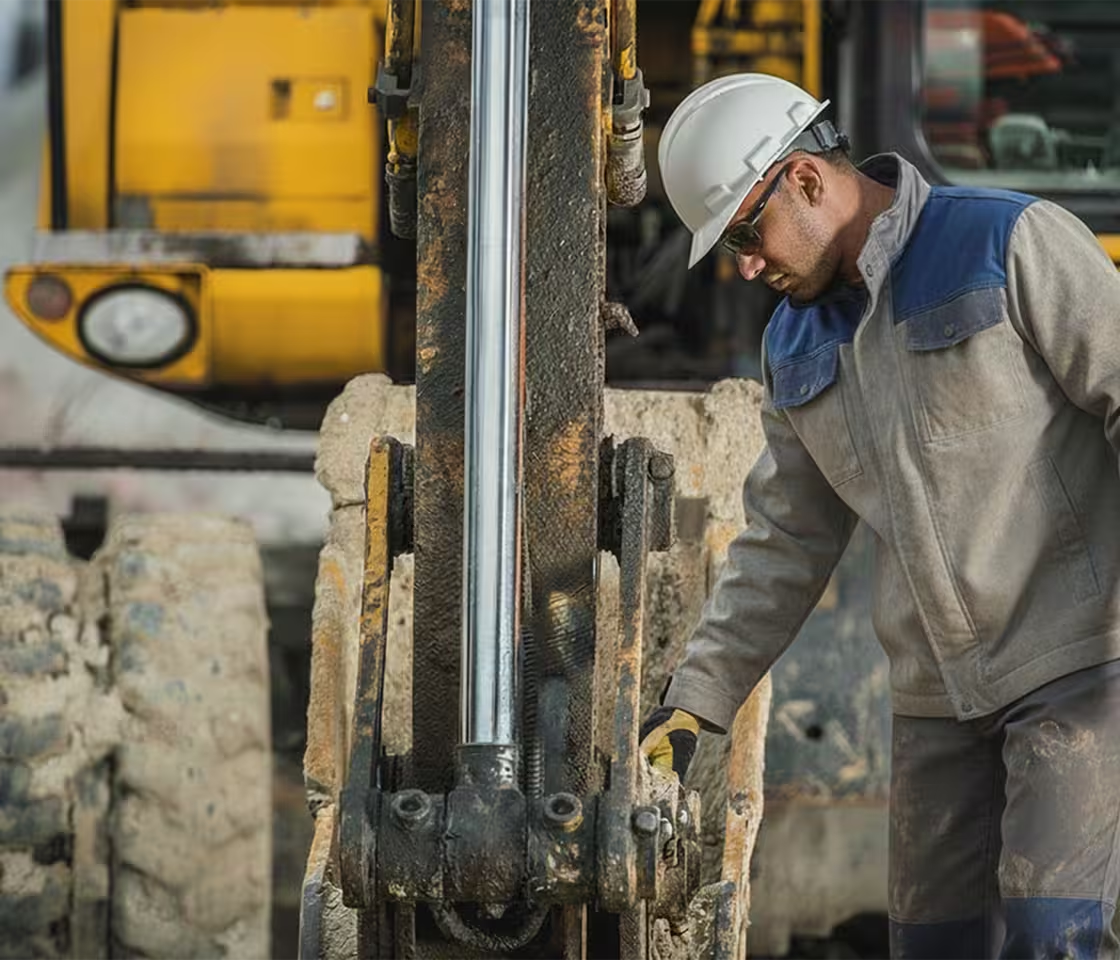
Addresses industrial construction considerations beyond commercial fit-out. Covers process-driven design, structural requirements, industrial MEP systems, controlled environments, commissioning complexity, construction execution, and regulatory requirements. Practical guidance for manufacturing and production facility delivery.
Industrial construction differs fundamentally from commercial fit-out. Manufacturing facilities, warehouses, logistics centers, and production plants have requirements that do not appear in office or retail projects: process utilities, heavy equipment foundations, high bay structures, specialized flooring, controlled environments, and phased commissioning tied to production ramp-up.
Delivering industrial facilities successfully requires understanding how buildings serve production operations, not just how to construct building shells. The delivery team must coordinate with process engineers, equipment vendors, and operations teams whose priorities differ from typical commercial stakeholders.
This article explains how to approach industrial construction in India, addressing the specific considerations that determine whether a manufacturing or production facility performs as intended.
Industrial construction shares some elements with commercial construction (structure, envelope, basic MEP) but adds complexity in several dimensions:
Process-driven design. Industrial facilities exist to support production processes. Building design must accommodate process requirements: equipment layouts, material flows, utility demands, and operational workflows. The building serves the process, not the other way around.
Heavy equipment and structural loading. Manufacturing equipment imposes loads that exceed typical commercial design. Equipment foundations, floor loading capacity, overhead crane systems, and vibration isolation require structural engineering beyond standard commercial practice.
Process utilities. Manufacturing requires utilities beyond standard HVAC and electrical: compressed air, process gases, vacuum systems, process cooling, steam, deionized water, and others depending on the industry. These systems require specialized engineering and coordination with process equipment.
Controlled environments. Many manufacturing processes require environmental control beyond occupant comfort: cleanrooms, temperature/humidity control, dust-free environments, or containment for hazardous materials. These requirements affect architectural, MEP, and construction approaches.
Safety and regulatory complexity. Industrial facilities often involve hazardous materials, high-energy equipment, or processes with specific safety requirements. Regulatory compliance may involve factory licensing, environmental permits, pollution control, and industry-specific regulations.
Phased commissioning. Industrial facilities typically commission in phases tied to production ramp-up rather than single-event occupancy. Commissioning must integrate building systems, process utilities, and production equipment while supporting ongoing construction or fit-out.
Industrial project success depends heavily on planning quality. Key planning elements include:
Process definition. Before building design can proceed, the production process must be defined: what is being produced, how, with what equipment, and at what capacity. Process definition drives facility requirements.
Equipment schedules. Process equipment drives many facility requirements: floor loading, utility demands, space requirements, environmental conditions, and installation access. Equipment schedules must be developed early enough to inform design.
Utility load analysis. Process utility demands (compressed air, gases, cooling, electrical) must be analyzed and sized. Utility infrastructure is expensive to modify after installation; getting it right requires accurate load information.
Material and product flow. Manufacturing involves material flow: raw materials in, products out, waste and recycling streams. Facility layout must support efficient flow without congestion or cross-contamination.
Expansion and flexibility. Manufacturing needs change over time. Facilities should accommodate reasonable expansion and process modification without major reconstruction. Planning for flexibility costs less than rebuilding later.
Phasing strategy. Many industrial projects phase construction to enable partial production while work continues. Phasing requires careful planning to maintain operational areas while construction proceeds safely.
Industrial structures differ from commercial buildings in load requirements and configuration.
Floor loading. Manufacturing equipment, storage systems, and material handling impose floor loads well above commercial standards. Floor design must account for point loads (equipment legs), area loads (storage), and dynamic loads (forklifts, moving equipment).
Floor flatness and levelness. Many industrial processes require floor flatness and levelness specifications (F-numbers) more stringent than commercial construction. Automated storage systems, precision equipment, and material handling systems may have specific floor tolerance requirements.
Equipment foundations. Heavy or vibrating equipment typically requires isolated foundations separate from the building floor slab. Foundation design depends on equipment weight, dynamic characteristics, and vibration isolation requirements. Foundation locations and loadings must be coordinated with equipment vendors.
Column spacing and clear heights. Manufacturing layouts require clear spans for equipment placement and material flow. High bay storage and overhead cranes require clear heights well above commercial standards. Structural design must balance span, height, and economy.
Overhead systems. Cranes, hoists, conveyors, and overhead utilities require structural support integrated with the building frame. Support locations, load capacities, and dynamic factors must be incorporated into structural design.
Future expansion. If expansion is anticipated, structural design should accommodate future additions: foundation provisions, connection points, and structural capacity for expanded loads.
Industrial MEP systems extend beyond commercial heating, cooling, and power:
Electrical systems. Industrial facilities typically have higher power density and different load characteristics than commercial buildings. Large motors, welding equipment, process controls, and high-density computing require electrical infrastructure sized and configured for industrial loads. Power quality (voltage stability, harmonic mitigation) may be critical for sensitive processes.
Process cooling. Manufacturing processes often require cooling beyond HVAC: chilled water for process equipment, cooling towers for heat rejection, and refrigeration systems for specific temperature requirements. Process cooling is separate from comfort cooling and sized for actual process loads.
Compressed air. Many manufacturing processes require compressed air at specific pressures, flow rates, and quality levels. Compressed air systems include compressors, dryers, filters, receivers, and distribution piping sized for process demands.
Process gases. Manufacturing may require specialty gases: nitrogen for inerting, oxygen for combustion, argon for welding, or process-specific gases. Gas systems include storage (bulk tanks or cylinders), distribution piping, and point-of-use regulation.
Exhaust and ventilation. Manufacturing processes may generate fumes, dust, heat, or vapors requiring exhaust and ventilation systems beyond comfort HVAC. Local exhaust ventilation at source points, general dilution ventilation, and makeup air systems must be coordinated with process requirements.
Water systems. Beyond domestic water, manufacturing may require process water, deionized water, or water treatment systems. Wastewater may require treatment before discharge depending on process characteristics.
Many manufacturing processes require environmental control beyond occupant comfort:
Cleanrooms. Electronics, pharmaceuticals, medical devices, and precision manufacturing often require cleanroom environments with controlled particle counts. Cleanroom design involves specialized HVAC (air changes, filtration, pressure control), construction materials and methods, and certification testing.
Temperature and humidity control. Some processes require precise temperature and humidity conditions. Precision HVAC with close control tolerances and redundancy may be required.
Vibration control. Precision manufacturing, metrology, and sensitive equipment may require vibration isolation from building structure, mechanical equipment, and external sources. Vibration control involves structural isolation, equipment mounting, and source mitigation.
Containment. Processes involving hazardous materials may require containment: negative pressure rooms, airlocks, spill containment, and specialized ventilation.
Industrial commissioning is more complex than commercial building commissioning because it involves building systems, process utilities, and production equipment:
Building systems commissioning. Standard commissioning of HVAC, electrical, plumbing, fire protection, and building controls similar to commercial projects.
Process utility commissioning. Commissioning of compressed air, process gases, cooling water, and other process utilities. This includes pressure testing, leak testing, flow verification, and quality testing.
Cleanroom certification. For controlled environments, certification testing verifies particle counts, air velocities, pressure differentials, and temperature/humidity control meet specifications.
Equipment commissioning. Production equipment commissioning involves installation verification, utility connection, startup, and performance testing. Equipment vendors typically participate in commissioning their systems.
Integrated systems testing. Testing of interactions between building systems, process utilities, and production equipment. This identifies issues that only appear when systems operate together.
Production ramp-up support. Commissioning often overlaps with production ramp-up. Facility teams must support trial production, identify issues, and make adjustments while maintaining safe operations.
Commissioning planning should begin during design. Commissioning sequences, responsibilities, acceptance criteria, and schedules should be documented and coordinated with all parties.
Industrial construction execution has specific considerations:
Sequencing. Industrial construction often involves complex sequencing: building structure before equipment foundations, utilities before equipment installation, clean construction before cleanroom certification. Sequencing must be planned carefully and coordinated across all contractors.
Equipment installation. Large equipment may require special rigging, heavy cranes, and coordinated installation sequences. Equipment vendors should participate in installation planning.
Cleanliness during construction. Facilities with cleanliness requirements must control contamination during construction. Clean construction protocols, phased cleaning, and temporary protection systems may be required.
Concurrent operations. Industrial projects often involve construction while adjacent areas are operational. Separation, safety protocols, and schedule coordination are essential.
Vendor coordination. Industrial projects involve more vendor coordination than typical commercial projects: process equipment vendors, controls integrators, specialty contractors, and commissioning agents. Coordination responsibility must be clear.
Industrial facilities face regulatory requirements beyond standard construction permits:
Factory license. Manufacturing operations require licensing under the Factories Act, involving documentation of processes, safety provisions, and working conditions.
Environmental clearances. Facilities with significant environmental impact require environmental clearances and pollution control board consents. Air emissions, wastewater discharge, and hazardous waste all have regulatory requirements.
Fire safety. Industrial facilities with hazardous materials, high fire loads, or special occupancies require fire department review and approval.
Industry-specific regulations. Certain industries (pharmaceuticals, food, chemicals, electronics) have additional regulatory requirements affecting facility design and operation.
Regulatory requirements and approval timelines should be identified early and incorporated into project schedules.
Industrial construction in India involves specific considerations:
Infrastructure constraints. Power availability, water supply, and transportation infrastructure vary by location. Site selection should consider infrastructure adequacy for industrial operations.
Labor and skills. Industrial construction requires specialized trades (millwrights, process piping, controls electricians) that may be less available than standard construction trades. Labor planning should account for specialized skill requirements.
Equipment sourcing. Process equipment may be imported, requiring coordination with customs, transportation, and extended lead times. Domestic equipment availability varies by industry and specification.
Supply chain. Materials for industrial construction (specialty piping, industrial flooring, process equipment) may have longer lead times and more variable availability than commercial materials.
Regulatory variation. Regulatory requirements and approval processes vary by state and locality. Local experience helps navigate approvals efficiently.
If you are planning industrial construction in India:
Start with process. Define production processes and equipment requirements before building design. Process drives facility requirements.
Engage operations early. Operations teams understand how facilities must perform. Engage them in planning and design to ensure facilities meet operational needs.
Plan utilities carefully. Process utility systems are expensive to modify. Invest in accurate load analysis and appropriate sizing with growth allowance.
Coordinate equipment vendors. Equipment vendors must participate in foundation design, utility coordination, and installation planning. Establish coordination processes early.
Plan commissioning from the start. Commissioning is complex and schedule-critical. Plan commissioning sequences, responsibilities, and schedules during design.
Account for regulatory requirements. Identify regulatory requirements early and build approval timelines into the project schedule.
Select experienced delivery partners. Industrial construction requires experience beyond commercial fit-out. Select contractors and consultants with relevant industrial track records.
Industrial facilities that are planned and executed well support efficient production from day one. Industrial facilities that are treated like oversized commercial projects struggle with process integration, utility adequacy, and commissioning problems that delay production ramp-up.
Vestian's construction teams have delivered manufacturing, logistics, and production facilities across India. We understand that industrial buildings exist to serve production operations, and we coordinate with process engineers, equipment vendors, and operations teams to ensure facilities perform as intended. Our integrated delivery model brings design, cost, and construction together so that process requirements drive facility design from the start.
If you're planning industrial construction in India, reach out to start a conversation.