
Share this article


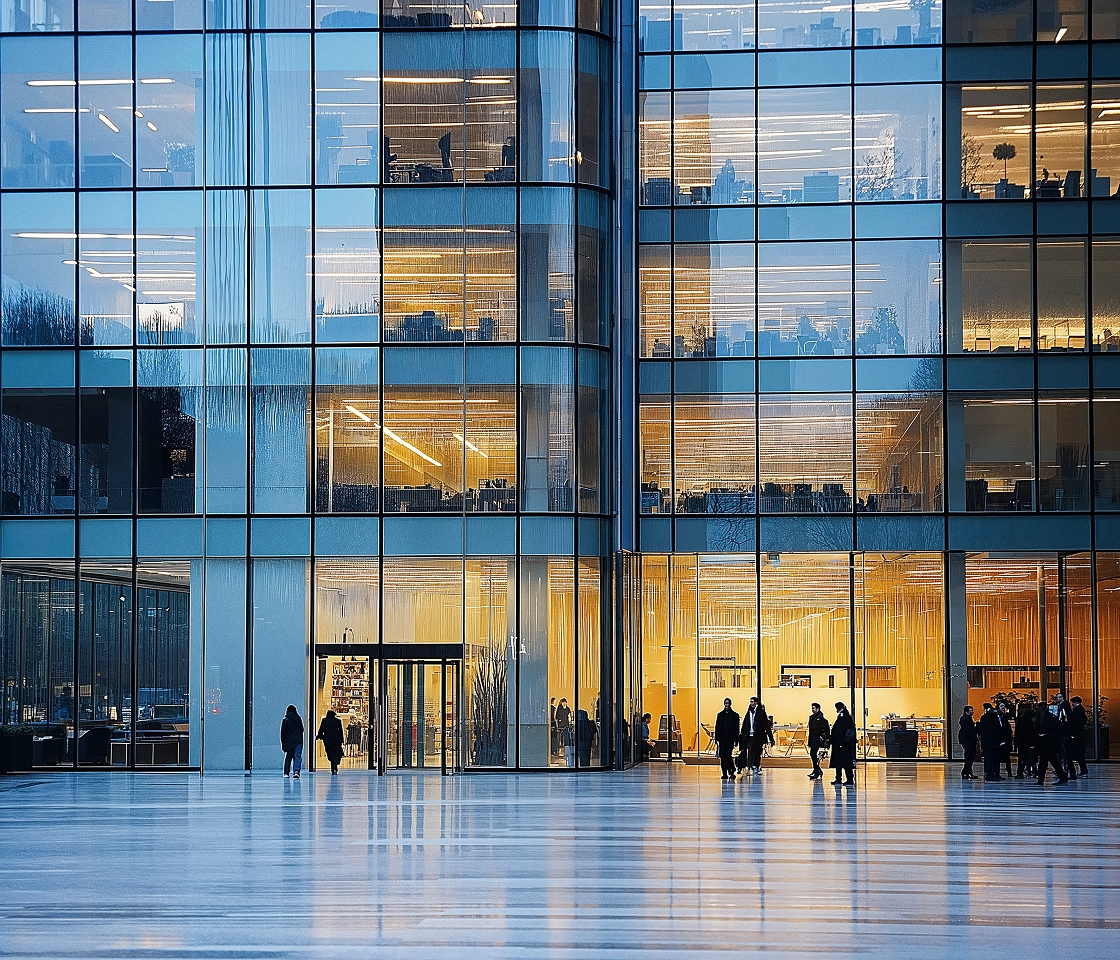
Global real estate in 2026 centers on asset quality and ESG compliance over scale. Key themes include US market bifurcation, Europe's sustainability mandates, India's structural growth, APAC resilience, and Middle East transformation.
Across countries, 2026 marks a shift toward disciplined capital deployment, experience-led design, and long-term performance. Markets that combine policy clarity, sustainability, talent depth, and infrastructure readiness are best positioned to attract both occupiers and investors. As global real estate enters a phase of structural maturity, relevance—not scale—will define success.
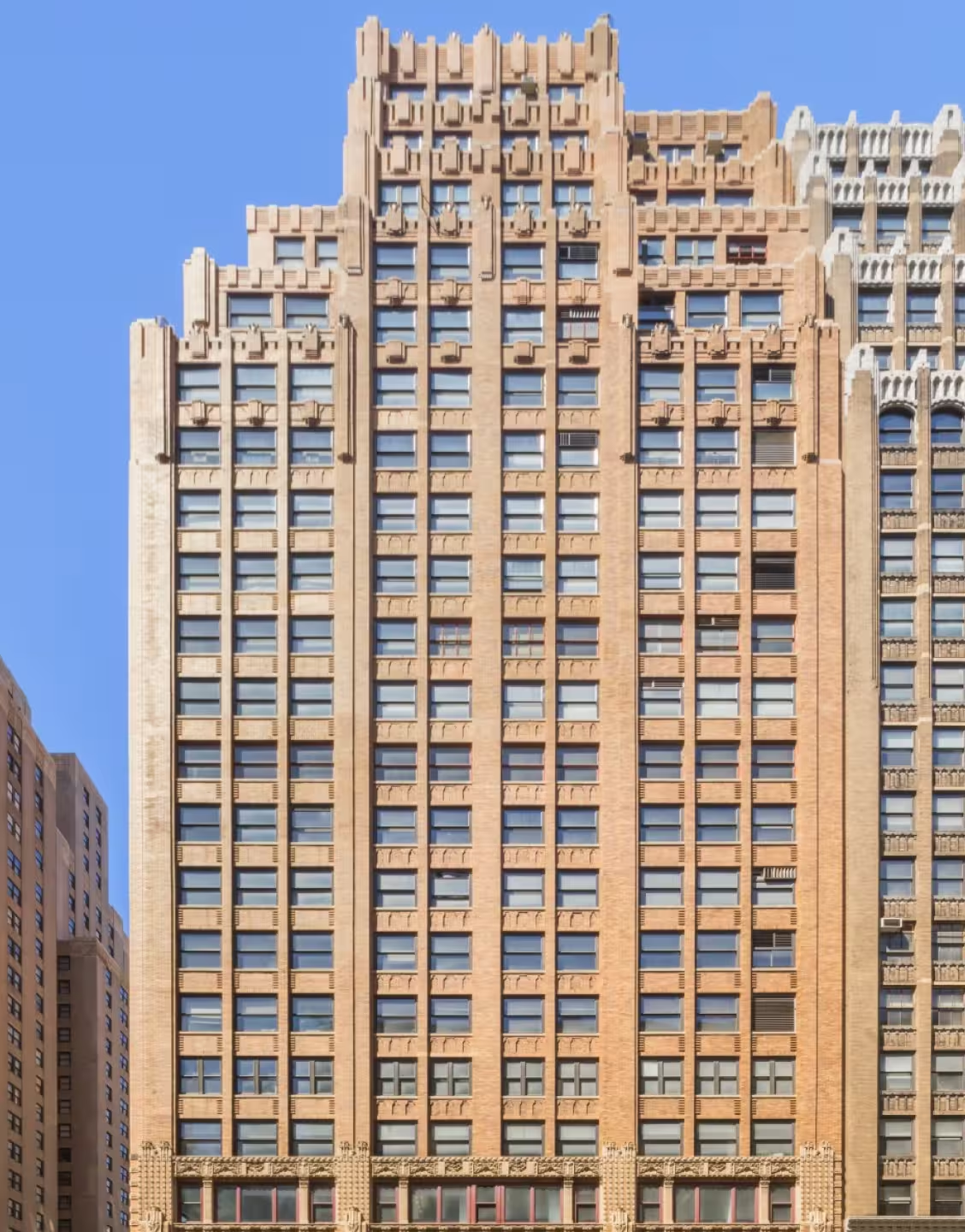
The US remains one of the most active real estate markets globally, but performance is increasingly polarised. Prime, ESG-compliant office assets in gateway cities continue to attract occupiers and capital, while older, non-compliant stock faces sustained vacancies and value correction. Sun Belt cities such as Austin, Dallas, and Miami continue to benefit from corporate migration, talent inflows, and infrastructure investment. At the same time, data centres and logistics assets are emerging as core investment themes, driven by AI adoption, cloud computing, and e-commerce growth.
Across Europe, real estate markets are being shaped by stringent ESG regulations and sustainability mandates. As EU’s Energy Performance of Buildings Directive EPBD is integrated into national laws, retrofitting will be mandatory for asset liquidity. While cities such as London, Paris, Berlin, and Amsterdam will continue to see strong demand for Grade A, energy-efficient offices, secondary stock will struggle to remain viable. Capital deployment remains disciplined, with investors favouring assets that offer long-term income visibility and regulatory compliance. Adaptive reuse and refurbishment are gaining momentum as owners seek to extend asset life cycles.
India stands out as one of the few major markets combining strong occupier demand, expanding domestic capital, and rising institutional interest. The record USD 8.1 billion in institutional investments reflects confidence in India’s long-term fundamentals. GCC expansion, infrastructure-led urban growth, and increasing demand for high-quality workplaces are driving momentum across cities such as Bengaluru, Hyderabad, Pune, and NCR. Integrated, future-ready developments are increasingly preferred over standalone assets.
Markets such as Singapore, Australia, and select Southeast Asian cities continue to demonstrate resilience due to strong governance, deep talent pools, and infrastructure readiness. Singapore remains a preferred regional headquarters market, while Australia’s office and logistics sectors benefit from institutional-grade transparency. Across the region, logistics, data centres, and mixed-use developments are outperforming traditional asset classes.
The Middle East—particularly the UAE and Saudi Arabia—is experiencing accelerated real estate maturity. Large-scale urban development, economic diversification agendas, and rising foreign investment are reshaping cities such as Dubai and Riyadh. Demand is being driven by mixed-use destinations, Grade A offices, and experiential developments, supported by policy stability and global capital inflows.
Global real estate narrative will be defined by selective growth, asset quality, and long-term relevance.